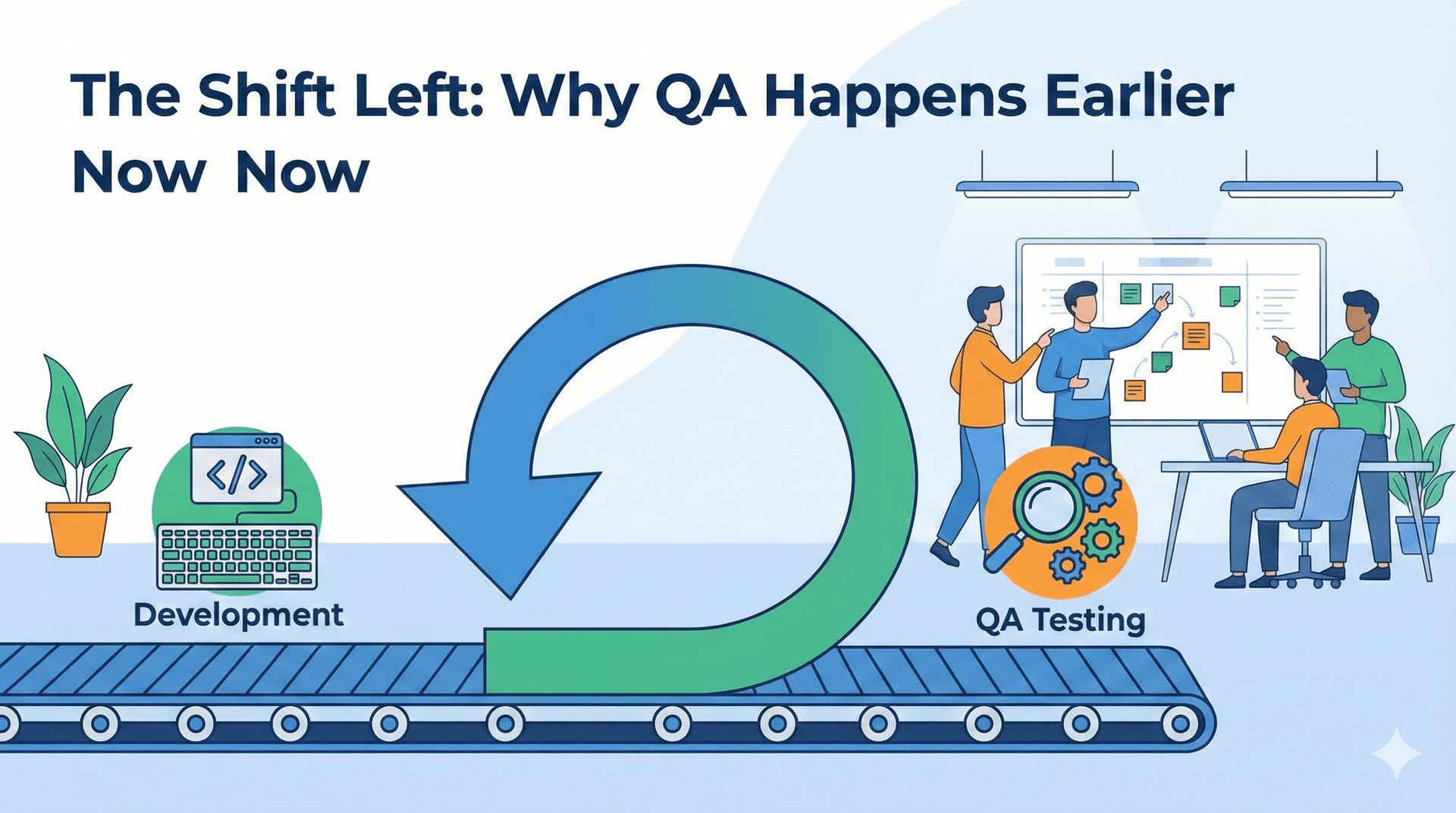
The Shift Left: Why QA Happens Earlier Now
An in-depth look at the "Shift Left" movement in DevOps, exploring why traditional testing models fail in high-velocity environments and how to implement earlier quality checks.
Jan 6, 2026
•2 min read
An in-depth look at the "Shift Left" movement in DevOps, exploring why traditional testing models fail in high-velocity environments and how to implement earlier quality checks.
The traditional waterfall model of testing—where QA is a gatekeeper at the very end of the release cycle—is dead. In today's world of CI/CD and daily deployments, waiting until 'code freeze' to start testing is a recipe for disaster.
Enter the Shift Left movement.
What is Shift Left?
"Shift Left" literally means moving the testing phase to the "left" on the project timeline. Instead of being the last step before deployment, testing becomes a continuous activity that starts during the requirements and design phases.
The Cost of Quality
The primary driver for this shift is economic. A bug found in the requirement phase costs pennies to fix—you just rewrite a sentence. A bug found in development costs time. But a bug found in production? That costs reputation, customer trust, and potentially millions in revenue.
"Quality is not an act, it is a habit." — Aristotle (and every improved DevOps team)How to Implement Shift Left
It's not just about running tests earlier; it's about a cultural change.
- Requirement Reviews: QA should review user stories for clarity and testability before a single line of code is written. "If we can't test it, we don't build it."
- Unit Tests as Contract: Developers must write unit tests that satisfy the QA requirements. Code review isn't just "looks good"; it's "do the tests cover the edge cases?"
- Automated PR Checks: No code merges to
mainwithout passing a suite of integration tests. This prevents "it worked on my machine" syndrome.
The Outcome
Teams that successfully shift left find that their "QA Phase" transforms from a stressful bug-hunting crunch into a verification formality. Deployments become boring—in the best way possible.